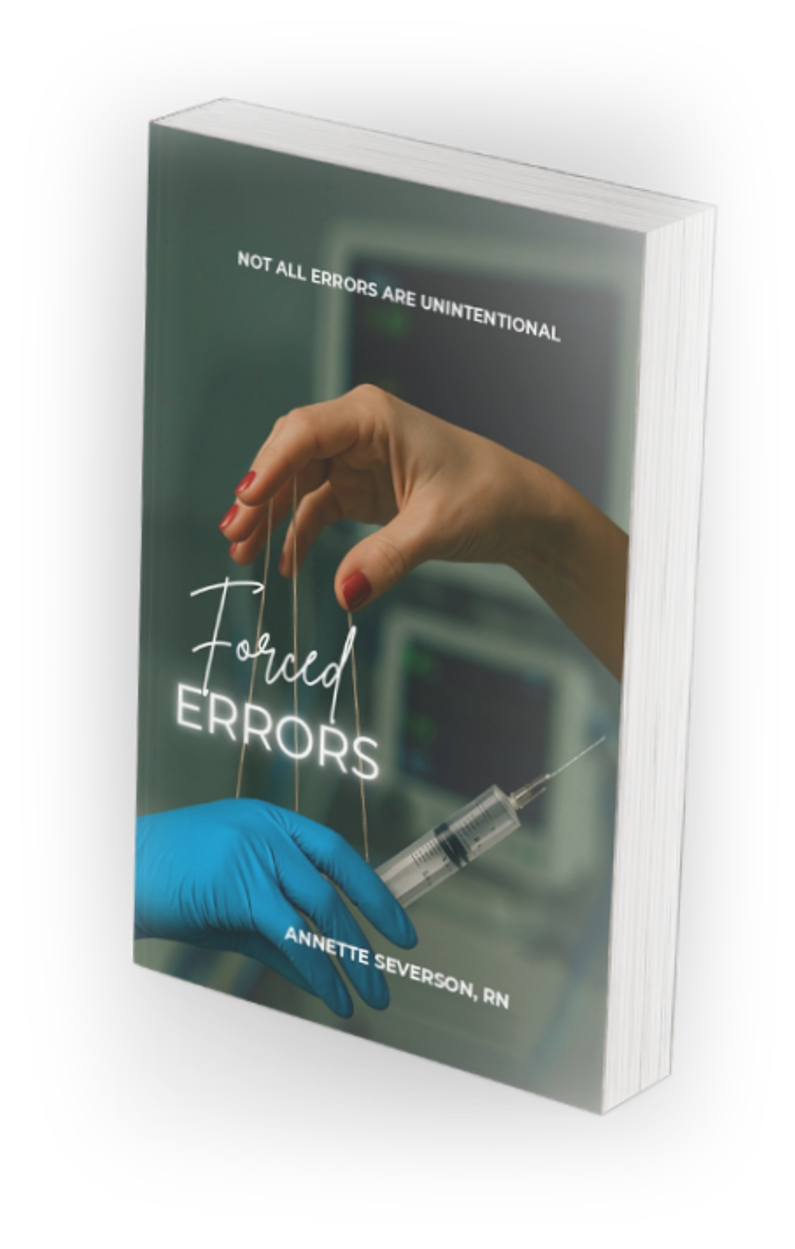
Forced ERRORS
The first book of the Nicole Healy series
Not all errors are unintentional...
She’s trained for emergencies. No one prepared her for doubt.
Critical care nurse Nicole Healy arrives at a prestigious Level I trauma center in the Pacific Northwest expecting challenge—not the quiet unease that greets her shift after shift.
Small inconsistencies surface. Conversations stall when she enters a room. And the mistakes happening around her don’t feel random. They feel connected.
To what—or to whom—she can’t yet see.
When physician Ramsey O’Brien arrives—steady, analytical, and difficult to read—Nicole finds both grounding and disruption in his presence. Their connection is immediate. Their timing is not.
And the attention it draws becomes its own kind of threat.
As pressures mount, loyalties blur, and subtle shifts inside the unit begin shaping her reputation, Nicole must navigate care, trust, and danger without knowing where the fault lines lie—or who benefits when she falters.
Because sometimes the most dangerous situations aren’t the ones that break you suddenly.
They’re the ones that make you question the instincts you used to trust.
Forced ERRORS is a tense, character-driven medical suspense about competence, intuition, and the cost of emotional resilience when the ground beneath you is being moved.
What people are saying about Forced ERRORS
Uncover the Fault Lines Together:
Trust, intuition, and institutional pressure—Forced ERRORS leaves readers with plenty to debate long after the final page.
Elevate your book club’s reading experience with the official Forced ERRORS Discussion Guide.
Enter your email below to unlock exclusive discussion prompts, character insights, and behind-the-scenes author notes perfect for your next group meeting.
Adaptive COLLATERAL
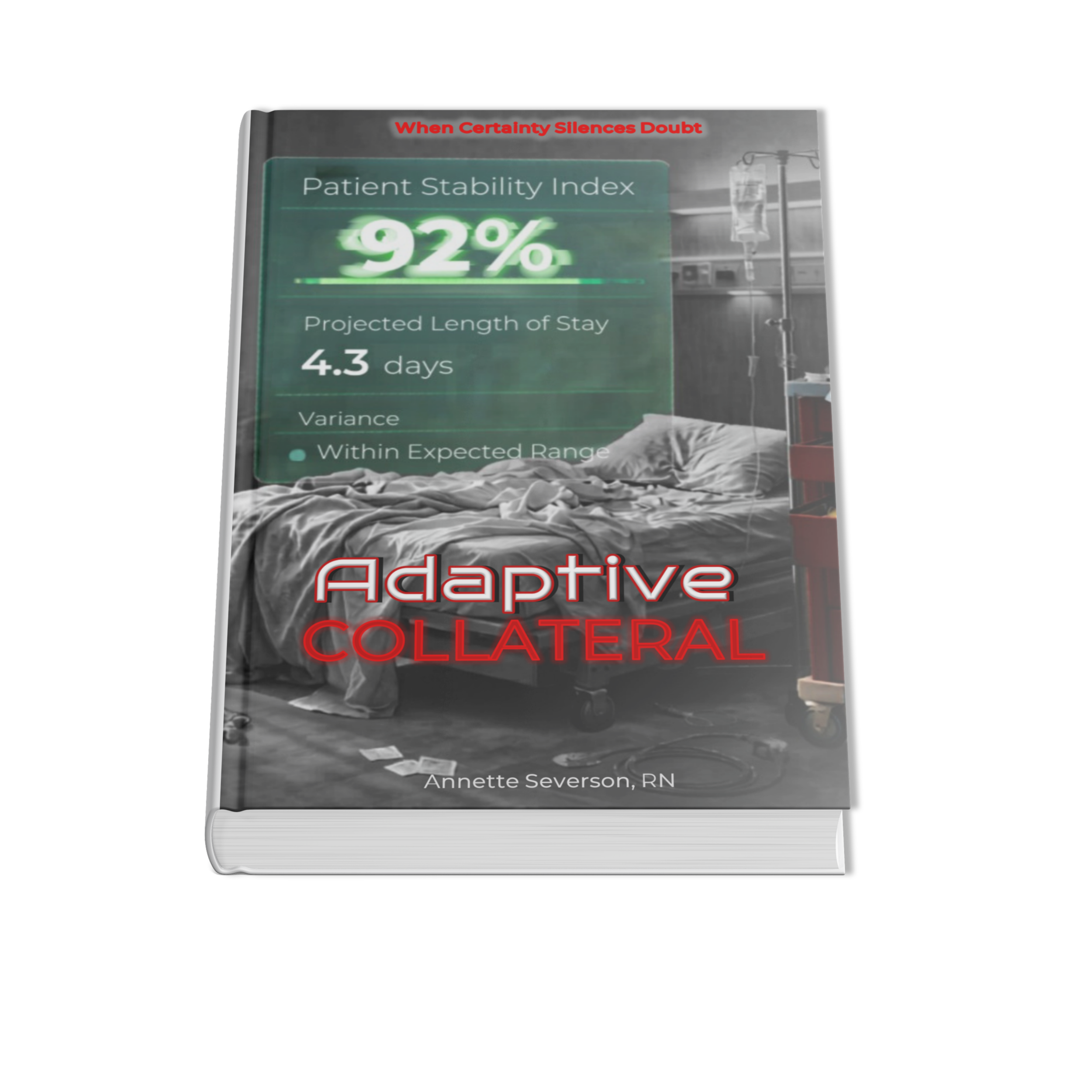
Adaptive Collateral is a provocative novel about healthcare leadership, artificial intelligence, ambition, and the subtle transfer of risk in modern institutions. For readers drawn to ethical dilemmas, hospital politics, and the human consequences of technological progress, it asks a question few want to confront:
When systems feel certain, who is still allowed to question them?
The system works.
At Cedar Brook Medical Center, CUNA—an artificial intelligence–driven clinical decision platform—predicts staffing gaps, discharge delays, and patient deterioration before clinicians see it coming. Executives call it innovation. Boards call it progress.
For nurse leader Nicole Healy, CUNA represents something she has spent her career fighting for: order in a chaotic system. Protection for patients. Protection for staff. A future where decisions are guided by data instead of guesswork.
Aligning with it could shape her career.
Then two patients decline in ways the model never predicted.
The explanation is immediate: statistical outliers. Acceptable loss. Within projected thresholds.
Expansion continues. The system is trusted. And the questions grow quieter.
As hospital leadership accelerates CUNA’s adoption and institutional confidence hardens into policy, Nicole faces a choice that threatens everything she has built. Challenging the model means challenging the people who control it. Staying silent means accepting a version of care she no longer recognizes.
Beyond the hospital, the same dynamic unfolds in faculty politics—authority presumed, behavior tolerated, dissent discouraged when it disrupts momentum. The danger isn’t the algorithm. It’s what happens when being aligned matters more than being vigilant.
Because when certainty silences doubt, someone pays….And it is paid at the bedside.